Items and Crafting in Graveyard Keeper 2: Materials, Tech Tree, Workstations
Graveyard Keeper 2 crafting runs on zombie labor and corpse materials — work yard stations, tech tree unlocks, army gear, and town markets for your goods.
FAQ
Is crafting in Graveyard Keeper 2 the same as the first game?
What crafting materials are confirmed so far?
What does the tech tree unlock in Graveyard Keeper 2?
When will full item lists and recipes be on this page?
Graveyard Keeper 2 is a crafting economy game wearing a coffin. Every system the developers have shown — zombie automation, town restoration, even the graveyard itself — routes through items: raw materials in, sellable goods and undead infrastructure out. This page collects every confirmed detail about how items and crafting work, sourced from the official developer diaries and the Steam feature list. Now that the game has launched (September 22, 2026), in-game item tables will be added as they are verified.
What is the items and crafting loop in Graveyard Keeper 2?
The loop is the first game’s, scaled up. You gather materials (wood from timber plots, and above all the products of corpse processing), craft them at workstations into goods and equipment, and sell the surplus into the markets the restored Town opens up. What changed is the labor: where Graveyard Keeper 1 let zombies run individual workstations, the sequel builds entire production chains around zombie workers — your role shifts toward planning what the developers call “a scalable and profitable operation.”
Where does crafting happen — work yard and underground factories?
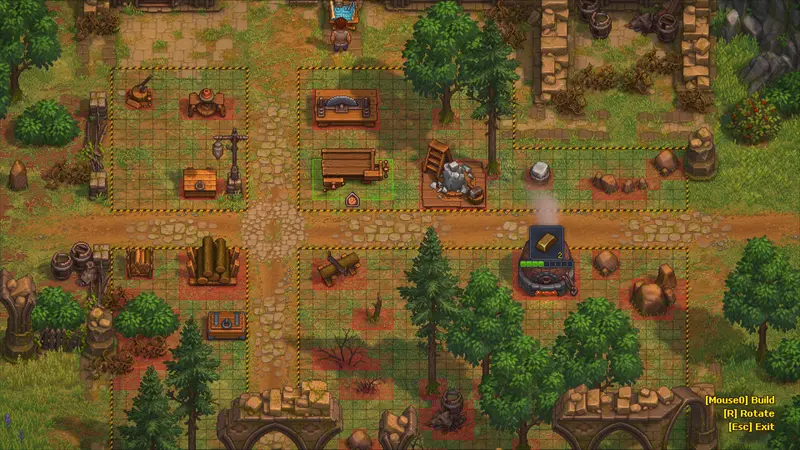
Crafting has two homes. The first is your work yard, the keeper’s property just outside the Town walls — official screenshots show it dotted with crafting stations, a furnace, and timber plots, and it is where every automation chain begins. The second is underground: zombie workers can efficiently operate both regular workbenches and entire semi-automatic machines in underground factories, scaling all the way to conveyor-belt production lines. Since zombies never ask for food, days off, or payment, late-game crafting is a matter of designing the factory, not babysitting it.
What materials are confirmed so far?
Pre-release, the confirmed material picture centers on corpses — the franchise’s signature supply chain:
- Corpse quality drives crafting materials. The larger and more prosperous the Town grows, the more corpses you receive and the better they are — so town restoration is effectively a materials upgrade path.
- Corrupted parts combine. The most corrupted parts from different corpses can be stitched together, and corruption embalming pushes quality even higher — the same red-skull economy that powers zombie skills.
- Timber and station basics. Official screenshots show the yard with crafting stations, a furnace, and timber plots for wood — the manual crafting layer the undead workforce eventually takes over.
What does the tech tree unlock?
Modernized progression is one of the sequel’s headline changes, and it feeds directly into placeable items. Through the tech tree you unlock special graveyard modules — the June 2026 developer diary names tombs, benches, columbaries, monuments, and of course graves — alongside many new grave designs and decorations. A separate talent system covers character progression. For how this compares to the first game’s flatter unlock curves, see every confirmed change versus Graveyard Keeper 1.
What items does your undead army need?
War gear is a whole crafting category. As Grand Inquisitor you build towers and fortifications, craft armor and weapons, and arm and train your troops for the strategic defense of the Town. Your soldiers are famously “intellectually-challenged” but loyal — the constraint is never their courage, it is your production line’s ability to keep them equipped. The full army system is covered in the zombies guide.
How do the Town’s markets change the item economy?
Restored buildings give your goods somewhere to go. Every business you bring back to life creates new markets for your goods and unlocks valuable products and resources for you to buy — so the item economy runs in both directions: raw materials out, specialty supplies in. Which buildings you restore, and therefore which markets you open, is one of the sequel’s real strategic choices (see town restoration).
What stays the same from Graveyard Keeper 1?
The tone and the corpse-first economics. The sequel keeps the first game’s signature mix of corpse processing, crafting, economy, and dark comedy — all four carry over. For a hands-on preview of the item loop today, the free demo (live since September 14, 2026) is the place to start; the original game remains an inexpensive second reference.
What we will add after launch
This page grows into the wiki’s item hub from here: full material tables, recipe lists, workstation inventories, and material farming locations — each entry verified in-game and dated, the same policy every page on this site follows. Pre-order pricing and launch timing are covered in the release guide; hardware needs in system requirements.
Gallery
Related Articles
guides
Graveyard Keeper 2 Achievements Guide: All 38 Listed and Ranked by Rarity
All 38 Graveyard Keeper 2 achievements with unlock conditions and global completion rates, plus what the rarity curve says about where players stall.
guides
Graveyard Keeper 2 AI Art Claims: The Official Answer
Is Graveyard Keeper 2 AI-generated? The developers say no outright. Here is the official statement, the launch-week debate, and what is actually verifiable.
guides
Graveyard Keeper 2 Beginner Guide: First-Week Tips and Mistakes to Avoid
New to Graveyard Keeper 2? This starter guide covers the corpse loop, the weekly calendar, tech-tree priorities, and the classic mistakes to avoid in week one.
Was this helpful?
Thanks for the feedback!