Graveyard Keeper 2 Beginner Guide: First-Week Tips and Mistakes to Avoid
New to Graveyard Keeper 2? This starter guide covers the corpse loop, the weekly calendar, tech-tree priorities, and the classic mistakes to avoid in week one.
FAQ
Is Graveyard Keeper 2 good for beginners?
Do I need to play the first Graveyard Keeper before the sequel?
Should I play the demo first?
Is there multiplayer or co-op?
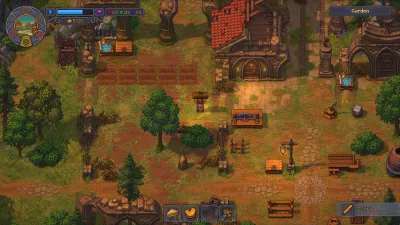
Graveyard Keeper 2 drops you into a graveyard, a morgue, and a Town full of roughly four thousand hostile zombies — then leaves the prioritizing to you. The good news: the opening is gentler than it looks. Your house, church, and graveyard come “just for being a decent person,” per the official combat devlog; only the Town itself has to be earned in battle. This guide walks the first week — what to do with corpses, how to plan the calendar, where the tech tree leads, and the mistakes new keepers make. Everything here is sourced from the official devlogs and Steam’s own achievement data as of October 23, 2026; in-game specifics are still being verified and dated as we confirm them.
What should you actually do first?
Process corpses. The core loop of week one is the morgue-to-graveyard pipeline: bodies arrive, you prepare them, then you either bury them for grave quality or reserve the sinful ones for zombie duty. Burying is permanent business — the Town diary says your duty “will still include burying townsfolk who reach the end of their journey,” and one late achievement asks for fifty burials — and cemetery quality is a tracked metric with its own 200-point milestone.
If you played the free demo, you have already lived this opening: the demo covers roughly the first three to four hours, and its save carried into the full game. If you are completely new to the series, the short version of the fantasy is “Stardew Valley, but you profit from the deceased” — see what kind of game this actually is.
How does the weekly calendar work?
This is the system newcomers most often miss. Several important activities are tied to specific days of the week:
- Town liberation battles happen only on a designated day — the rest of the week you prepare for them.
- The sewers under the Town are open the other six days, if you want fighting anyway.
- Quest-giver mechanics run on their own designated days; the characters themselves stay put now, but their special mechanics do not.
Between time-gated events, your job is production and discovery. Exploring pays double now: the Teleportstone is gone, and Milestones are how you fast-travel between unlocked locations — early on you walk, and the developers are unapologetic about it. The world extends well past the Town — the official story devlog lists a second village and tavern, another forest and swamp, another church and graveyard to the south.
What should you do with each corpse?
The sequel inverts the first game’s ethics. In Graveyard Keeper 1 you hunted white skulls for clean burials; here the most corrupted corpses are the valuable ones, because red-skull corruption is what powers zombie skill progression. Per the official zombie devlog:
- Sinners make the best zombies — keep townsfolk comfortable and the morgue stays stocked.
- Parts are combinable — stitch the most corrupted parts from different corpses together.
- Corruption embalming is the cherry on top.
So the practical triage: bury the ordinary dead to grow cemetery quality, and route the corrupted ones toward resurrection. The full decision framework — arrival, morgue prep, burial versus zombification versus harvesting — lives in the bodies and morgue guide.
Which progression systems matter early?
Three layers stack, and all three are official:
- The Technology Tree returns from the first game — the familiar unlock grid for buildings, crafting, and graveyard modules.
- A new talent system sits on top of it, designed (in the developers’ words) to make the grind “more enjoyable.” They also apologized in advance: “sadly, there will be less grinding this time.”
- Inspirations are the progression currency to watch — the achievement for 150 Inspirations confirms the system, and 32% of players have it so far.
The material ladder gives you the real difficulty curve. Steam’s global stats show 53% of players have smelted 100 bronze ingots, and 54% have reached 100 iron — the iron wall is real. Expect it to be your first big production milestone; feed it with zombie-run factories rather than hand-grinding, exactly like the automation loop wants.
What are the classic beginner mistakes?
Five traps, all avoidable in week one:
- Burying your most corrupted corpses. Those red skulls are your future skilled workers, not landfill. Check the corpse before it goes in the ground.
- Treating every day the same. Miss the battle day and the liberation stalls; miss an NPC’s designated day and you wait a week. Plan around the calendar, not against it.
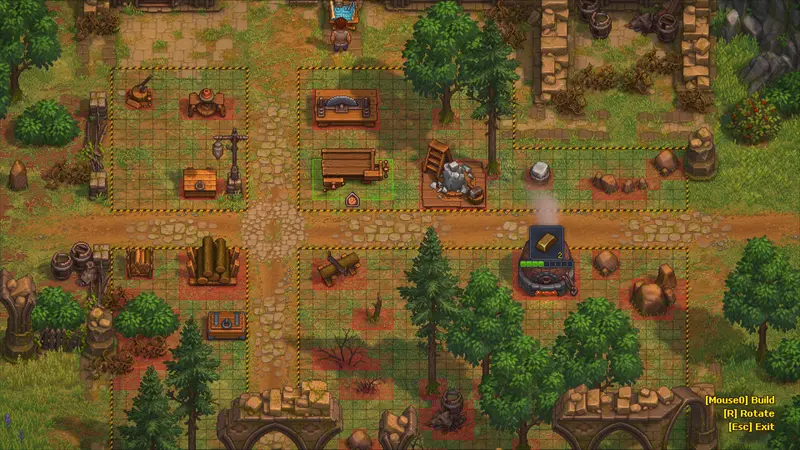
- Showing up to town battles under-prepared. Battles are won at the workbench: your crafted materials become the barricades and towers that hold the approaches. The combat guide covers the prep economy.
- Ignoring town orders. Completing your first town order is an early, cheap achievement (58% of players have it), and every restored building opens new markets for your goods. The Town is your customer base, not just your battlefield.
- Waiting to explore. The Teleportstone is gone, and the Milestone-gated fast travel that replaces it only opens up the world at walking pace — start learning it early.
What should week one look like?
A realistic shape, based on what the achievement curve says players actually reach: process corpses and deliver your first sermon in the opening hours (81% of players have), win your first town battle on its designated day (72%), complete your first town order (58%), and treat bronze smelting (53%) as the production goal that unlocks everything after it. The full milestone ladder — including where the crowd thins to single digits — is mapped in the achievements guide.
And if you are coming from the first game: most of your reflexes transfer, but the list of confirmed changes is worth five minutes — the talking skull is not Gerry, the Teleportstone is gone, and the economy now runs on restoring the Town district by district.
Related Articles
guides
Graveyard Keeper 2 Achievements Guide: All 38 Listed and Ranked by Rarity
All 38 Graveyard Keeper 2 achievements with unlock conditions and global completion rates, plus what the rarity curve says about where players stall.
guides
Graveyard Keeper 2 AI Art Claims: The Official Answer
Is Graveyard Keeper 2 AI-generated? The developers say no outright. Here is the official statement, the launch-week debate, and what is actually verifiable.
guides
Graveyard Keeper 2 Map and Fast Travel: The World, Explained
Graveyard Keeper 2 has a proper in-game map at last, Milestone fast travel between unlocked locations, and a world stretching well past the Town.
Was this helpful?
Thanks for the feedback!